Shopify SEO Agency
Shopify SEO That Compounds
Organic Revenue.
Stop Bleeding Margin to Meta and Google Ads. Our Shopify SEO Agency Builds Organic Acquisition That Outlasts Every CPM Increase.
- 100% five-star reviews on Trustpilot & Google
- No lock-in contracts
- 90-day performance guarantee
Trusted by industry leaders across Australia



















The short answer
A Shopify SEO agency optimises your store's collection architecture, variant canonicalisation, Core Web Vitals, app stack and product/collection content so your catalogue ranks for high-intent shopping queries. Odin Digital works natively across standard Shopify, Shopify Plus and Hydrogen headless builds, scoping engagements to catalogue size and technical debt rather than a flat retainer. Programmes run with transparent pricing and no lock-in contracts.
As Seen In






For Australian DTC and ecommerce brands, paid acquisition has become a treadmill — CPMs climb, iOS attribution shrinks, and your blended ROAS drifts down quarter after quarter. Shopify SEO is how the brands with the best unit economics get off the treadmill.
At Odin Digital, our Shopify SEO agency works exclusively with stores on Shopify, Shopify Plus, and Hydrogen — which means we know exactly how Shopify's collection and product architecture interacts with Google's ranking systems, where the duplicate-content traps live, and which apps quietly destroy your Core Web Vitals.
We engineer organic visibility around the searches that actually convert: category queries ("best linen sheets Australia"), comparison queries ("[brand] vs [competitor]"), problem-aware queries, and branded long-tail. Combined with ecommerce SEO fundamentals and content marketing, we build organic moats that paid competitors can't out-bid.
Whether you're a $50k/month founder-led brand scaling into seven figures or a Shopify Plus operator running multiple stores across regions, our SEO agency calibrates to your stage. Book your free Shopify SEO audit and see how much organic revenue your store is leaving on the table.
- 90 Days
- Performance guarantee or we work for free
- 100%
- Five-star reviews on Trustpilot & Google
- 72%
- Avg. Organic Revenue Lift (12mo)
- 0
- Lock-in contracts, ever
Paid Acquisition Eating Your Margin?
Your Meta CPMs are up 40% year over year. iOS 17 has shredded your attribution. Google's Performance Max can't tell you which products it's actually selling. Every channel costs more, performs less, and locks you into a content treadmill just to maintain flat revenue.
Meanwhile, your highest-margin competitors quietly own the organic SERP for your category. They rank for 'best [your category] Australia', their product pages own the long-tail, and their content captures buyers months before paid retargeting could ever reach them.
You can't out-bid your way to healthy unit economics. You need organic compounding.
Where Data Finds
its Voice.
Shopify SEO Built for DTC Economics.
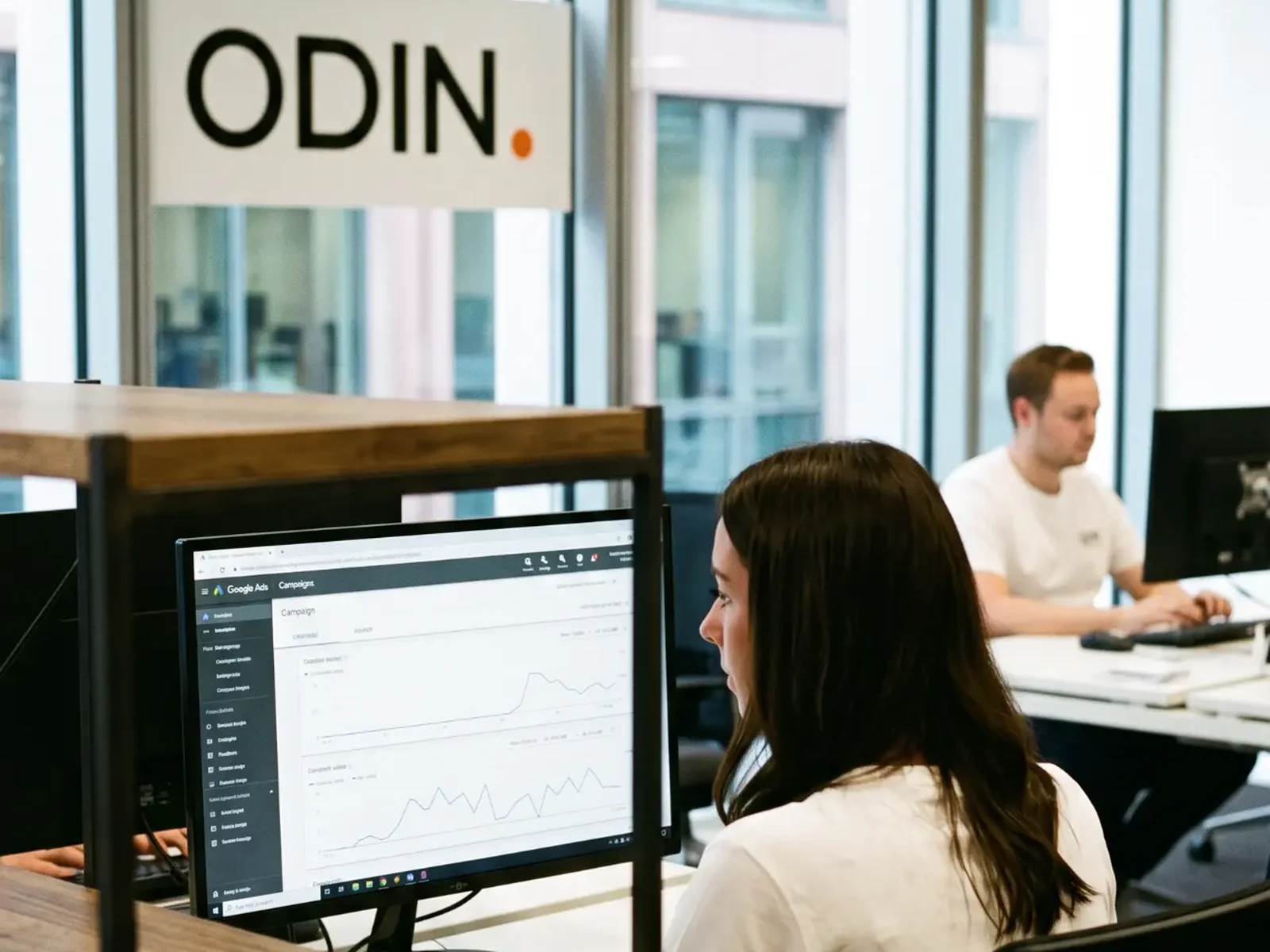
Our Shopify SEO agency engineers organic systems around the metrics that matter: organic revenue, organic-attributed orders, AOV from organic, and contribution margin. Every collection, product, and content piece earns its keep.
The Science
Collection architecture, variant canonicalisation, product schema, Core Web Vitals, app stack audits, and full GA4 + Shopify Analytics attribution.
The Art
Category-defining editorial content, comparison narratives, and product copy tuned to brand voice and search intent — built to convert, not just rank.
We don't just drive traffic. Our Shopify SEO agency drives orders, revenue, and margin.
The 3-Pillar System.
Collection & Variant Architecture
We restructure your /collections/ and /products/ paths to eliminate cannibalisation, deduplicate variant URLs with proper canonicals, and align your taxonomy to how Australian shoppers actually search — not how your merchandiser thinks.
Technical Shopify + Core Web Vitals
We audit every app, theme block, and third-party script for performance and rendering impact. Liquid optimisation, image pipeline, lazy-loading discipline, and full Product/Offer schema rolled out across the catalogue.
Content That Captures Buyers Early
Editorial blog content, buyer-guide hubs, and comparison pages that capture intent months before Meta retargeting could reach them — then funnel readers into collections and PDPs engineered to convert.
The Shopify SEO Process, Phase by Phase
Shopify stores fail at SEO for a specific reason most agencies never fix: the platform's defaults are built for speed of setup, not organic performance. Our process works through the store in a defined sequence, with a decision point at the end of each phase so you always know what happens next and why.
Phase 1 — Technical and architecture audit
One to two weeks. We crawl the store the way Googlebot does, mapping every /collections/, /products/ and /pages/ path, checking canonical tags on variant URLs, reviewing the app stack for render-blocking scripts, and auditing Core Web Vitals on template and PDP level rather than just the homepage. We also review the existing taxonomy against real search demand — most stores have collections built around internal merchandising logic rather than how customers search. What you receive: a prioritised technical audit with every issue ranked by ranking impact and effort. Decision point: which fixes require theme development versus configuration, and what sequence protects existing rankings while we work.
Phase 2 — Keyword and category mapping
We map category, comparison, problem-aware and branded long-tail queries against your existing collections and gaps in the catalogue. This becomes the blueprint for which collections get restructured, which need new landing pages, and which content supports them. What you receive: a keyword-to-URL map covering the entire catalogue. Decision point: approve the taxonomy changes before any collection is rebuilt or merged.
Phase 3 — Technical implementation
Canonical corrections on variant and filtered URLs, Liquid template optimisation, image pipeline and lazy-loading fixes, Product/Offer schema rollout, and app removal or replacement where performance is compromised. Changes are staged and tested before going live on a trading store — nothing is deployed that risks disrupting revenue during peak periods. What you receive: a changelog of every technical fix with before/after Core Web Vitals data.
Phase 4 — Content production
Collection intros, PDP copy, buyer-guide hubs and comparison pages are briefed against the keyword map from Phase 2 and against what's already ranking in the SERP. Copy is written to convert, not just to satisfy a word count. What you receive: a content calendar and drafts for review before publishing.
Phase 5 — Measurement, reporting and iteration
Once live, we track organic sessions, organic revenue, ranking distribution by collection, and Core Web Vitals through ongoing SEO reporting, feeding results back into the next round of content and technical priorities. What you receive: a monthly report tied to organic revenue and a forward plan, not just a ranking screenshot.
What's Included in a Shopify SEO Engagement
Engagements vary by catalogue size and store maturity, but the components below are what a genuine Shopify SEO programme covers. Agencies that only ever touch metadata and blog posts are not addressing the platform-specific issues that determine whether a Shopify store actually ranks.
Technical foundation
- Variant and pagination canonicalisation across /collections/ and /products/
- Core Web Vitals audit at template level — homepage, collection, PDP and cart
- App stack review for render-blocking scripts and duplicate functionality
- Liquid theme optimisation, including image compression and lazy-load discipline
- XML sitemap, robots.txt and crawl budget review for large catalogues
Architecture and taxonomy
- Collection restructure to match real search demand rather than internal merchandising logic
- Internal linking strategy between collections, PDPs and blog content
- Faceted navigation and filter URL handling to prevent duplicate content
- URL structure review for Shopify Plus multi-region and multi-currency set-ups
Content and on-page
- Collection intro copy and PDP descriptions briefed against keyword intent
- Buyer-guide and comparison content that captures research-stage traffic, tied to content marketing best practice
- Title tags, meta descriptions and heading structure across the catalogue
- Product, Offer, AggregateRating and Review schema rollout for rich result eligibility
Ongoing management and reporting
- GA4, Shopify Analytics and Search Console integration for a single source of truth
- Organic revenue, AOV and branded versus non-branded share reporting
- Monthly technical health checks as apps and themes are updated
- Coordination with paid teams so Google Ads and organic aren't competing for the same query with conflicting messages
Two things typically sit outside a Shopify SEO scope: full theme redesign work, which is a development project in its own right, and off-platform digital PR or link building, which we scope separately when a store's authority genuinely needs it.
How Shopify SEO Engagements Are Scoped and Priced
Shopify SEO is quoted against the specific work a store needs, not a flat retainer applied regardless of catalogue size. You should always understand what's driving the number before you sign anything.
What drives scope
- Catalogue size. A 50-SKU single-collection store needs a fraction of the technical and content work of a 2,000-SKU multi-category store.
- Technical debt. Stores that have accumulated years of app installs, theme edits and unmanaged collections need a heavier initial technical phase before content work can compound.
- Content velocity. Category-defining organic visibility usually requires sustained content production, not a one-off batch of blog posts.
- Competitive intensity. A category with several well-optimised competitors already ranking requires more content and technical depth to displace than an under-served niche.
- Platform complexity. Shopify Plus multi-region set-ups and Hydrogen headless builds require specialist development time that standard Shopify doesn't.
How it's typically structured
Most Shopify SEO programmes run as an initial technical and architecture phase, followed by an ongoing monthly programme covering content production, technical maintenance and reporting. Some stores need a defined project scope instead — a taxonomy rebuild or a technical migration cleanup — with no ongoing commitment. We scope after an audit rather than quoting a number before we've seen the store, because catalogue size and technical debt vary too widely for a standard price to be honest.
What keeps cost proportionate
- Fixing the highest-impact technical issues first rather than working alphabetically through an audit
- Prioritising collections and content around commercial value, not just search volume
- Reusing content across the site, email and paid social rather than commissioning separately for each channel
- No lock-in contracts, so scope can flex as the store's catalogue and priorities change
We publish transparent pricing principles rather than a rate card because Shopify stores differ too much for a generic number to mean anything — a free Shopify SEO audit is the fastest way to get an accurate scope for your store specifically.
Shopify SEO Agency vs Generalist SEO Agency vs In-House/Freelancer
Every option below can technically "do SEO" on a Shopify store. The difference is whether the person doing the work understands the platform's specific traps, and whether they have the hours to do it properly.
Generalist SEO agency
Works when: your store's issues are generic content and link gaps rather than platform-specific technical debt, and the agency has genuinely worked on ecommerce before. Breaks when: Shopify's quirks are misdiagnosed — variant duplication treated as a content problem, app-driven Core Web Vitals issues left unaddressed, or collection architecture recommendations that don't account for how Shopify handles pagination and filtering. A generalist playbook applied to Shopify often produces recommendations that are technically correct for WordPress and irrelevant, or actively wrong, for Shopify's Liquid-based structure. Real cost: broad strategic thinking without the platform depth to execute it correctly, meaning technical issues persist under the surface of otherwise sound content work.
In-house team or Shopify freelancer
Works when: you have someone who lives in the Shopify admin daily, understands Liquid, and has bandwidth to combine technical fixes with sustained content production. Freelancers can be excellent for a single defined project — a migration cleanup or a theme performance fix. Breaks when: the same person is expected to cover technical SEO, content strategy, schema markup, app auditing and reporting simultaneously, which is rarely one person's genuine skill set. Freelancers also typically lack the bandwidth for the sustained content velocity that organic growth requires once the technical foundation is fixed. Real cost: lower day-rate, but stretched across too many disciplines to execute any of them at depth, and no backup if the freelancer becomes unavailable.
Shopify SEO agency
Works when: the store needs technical depth (variant canonicalisation, Core Web Vitals, app auditing), architectural work (collection taxonomy) and sustained content production running concurrently, coordinated as one programme rather than three separate relationships. You're buying platform-specific pattern recognition — knowing in advance which apps typically cause problems, how Shopify Plus scripts interact with tracking, and how Hydrogen routing affects indexation — rather than learning it on your store. Breaks when: your catalogue is small enough and your technical debt low enough that a competent freelancer covers everything you need without the coordination overhead of an agency team.
The honest test
If your store's SEO problem is primarily "we haven't written enough content," a generalist or freelancer may be sufficient. If the audit reveals variant duplication, app-driven performance issues, or a collection structure fighting itself for rankings, platform-specific expertise stops being optional — those problems compound quietly and get more expensive to unwind the longer they're left, regardless of how much content sits on top of them.
How Shopify SEO Differs by Sector
The technical fundamentals of Shopify SEO stay constant across every store. What changes by sector is which queries actually convert, how the catalogue should be structured, and what content earns trust before someone will buy.
Fashion and apparel
Apparel catalogues generate the most variant duplication of any sector — colour, size and sometimes fit each spinning off near-identical URLs. Collection architecture has to reflect how shoppers actually browse (occasion, style, fit) rather than just the internal size-run logic of the warehouse system. Seasonal collections need a deliberate URL strategy so ranking equity isn't rebuilt from scratch every season, and comparison content ("[style] vs [style]", "how to style [item]") captures research-stage browsing that eventually converts.
Health and supplements
A category where content credibility matters more than volume. Product and ingredient pages need to answer genuine research questions without overstating claims, and category pages benefit from buyer-guide content that explains use cases rather than just listing SKUs. Schema accuracy matters here too — ingredient, dosage and certification information should be structured cleanly, and any health-adjacent claim needs to be handled carefully given advertising restrictions on therapeutic and health claims.
Homewares and furniture
High-consideration, high-AOV purchases with long research journeys, which makes comparison and buyer-guide content ("best [product] for [room/use case]") particularly valuable — it captures shoppers weeks before they're ready to buy. Collection taxonomy needs to work across multiple ways people search (by room, by style, by material), and PDPs benefit from detail-rich content on dimensions, materials and care, since these are exactly what buyers search for before committing to freight-heavy purchases.
Food and beverage
Frequently a hybrid of subscription and one-off purchase models, which means collection and PDP structure needs to clearly separate the two rather than forcing subscription logic onto every product page. Local and ingredient-origin queries matter more here than in most sectors, and recipe or usage content tied to products can capture demand long before a branded search ever happens. Perishable and limited-run products raise the same seasonal-URL question as apparel — plan the URL strategy before the first drop goes live.
B2B and trade-supply ecommerce
Often the most technically complex Shopify catalogues — large SKU counts, spec-driven variants, and buyers who search by part number, specification or compliance standard rather than descriptive category terms. Search intent here is closer to technical documentation than retail browsing, so PDP content needs to answer specification questions directly, and collection structure should mirror how trade buyers categorise products professionally, not consumer-facing marketing language. Account-based pricing and login-gated catalogues also require careful handling so pricing pages remain crawlable where appropriate.
Common Shopify SEO Mistakes and What Good Looks Like
The failures we see repeatedly across Shopify stores are consistent enough to name, and almost all of them are structural decisions made early that quietly compound.
Treating collections as a merchandising afterthought
Collections built purely around internal category logic, with no consideration of how customers actually search. Good looks like: taxonomy mapped against real keyword demand, with collections that exist because people search for them, not just because the warehouse organises stock that way.
Ignoring variant and pagination duplication
Every colour and size spinning off its own indexable URL, splitting ranking signal across dozens of near-identical pages instead of consolidating it onto one strong product page. Good looks like: correct canonical tags on every variant and paginated URL, verified with a crawl rather than assumed from the theme's defaults.
Installing apps without auditing performance impact
Review widgets, upsell pop-ups and currency converters added one at a time until Core Web Vitals quietly collapse, with no single change ever getting the blame. Good looks like: every app in the stack reviewed for its rendering and script impact before and after installation, with lighter alternatives used where the functionality allows it.
Writing product copy for the merchandiser, not the searcher
Descriptions that repeat the product name and list specs with no context for why someone would choose it. Good looks like: copy briefed against actual search intent and competitor SERP analysis, answering the questions a buyer has before checkout, not just the ones the internal team thinks matter.
No plan for seasonal or discontinued products
Collections and products deleted outright when a season ends or stock runs out, throwing away accumulated ranking signal and creating dead links across the site. Good looks like: a deliberate redirect and content strategy — keep, redirect to a relevant parent, or refresh for the next cycle — decided before the page goes down.
Measuring rankings instead of organic revenue
Reporting that stops at position tracking, with no link back to sessions, orders or contribution margin. Good looks like: reporting built on ecommerce SEO attribution — organic revenue, AOV and order volume tied to the technical and content work driving them, not rankings in isolation.

Why Shopify Brands Choose Odin Digital.
Platform Expertise
Generic ecommerce playbooks
Native Shopify, Shopify Plus, and Hydrogen specialists
Collection Strategy
Ignore /collections/ pages
Restructure taxonomy to match real search demand
Technical SEO
Theme audit only
Full app stack + Core Web Vitals + variant canonical audit
Content
Generic blog posts
Buyer-guide hubs and comparison pages tied to PDP intent
Reporting
Rankings + traffic
Organic revenue, AOV, and contribution margin attribution
Apps
Recommend more apps
Audit and remove performance-killing apps first
Headless
Not supported
Hydrogen + Oxygen SSR and routing supported
Guarantee
12-month lock-in
90-day KPI guarantee or we work for free
Inside the Shopify SEO Programme.
A complete organic acquisition system built for Shopify, calibrated to your catalogue size, brand stage, and contribution margin goals.
Collection Architecture
Taxonomy restructure, canonical strategy, and internal-link graph engineered to consolidate ranking signal across collections.
Technical + App Stack Audit
Core Web Vitals, render-blocking scripts, app overlap, and Liquid optimisation across theme and PDP templates.
Product & Collection Copy
SEO-optimised collection intros, PDP descriptions, and buyer-guide content tuned to brand voice and category SERPs.
Product Schema + Rich Results
Full Product, Offer, AggregateRating, and Review schema rollout for rich result eligibility across the catalogue.
Comparison & Alternative Pages
Capture high-intent comparison searches that convert at 3-5x standard content rates.
Revenue Attribution
GA4 + Shopify Analytics + Search Console reporting on organic revenue, AOV, and contribution margin — not just traffic.
This Service Works Best For…
DTC Shopify brands doing $30k+/month and feeling paid acquisition margin compression
Shopify Plus operators with 200+ SKUs and multiple collections needing taxonomy work
Brands with a clear category position who want to own organic SERP for 'best [category]' queries
Founders ready to invest in content as a long-term moat rather than chasing short-term ROAS
Stores with existing brand demand but underperforming organic non-branded share
This probably isn't the right fit if…
Pre-launch stores without product-market fit (validate with paid first, then layer organic)
Single-product stores with no category context (organic ceiling is too low to justify the investment)
Brands expecting revenue impact in under 90 days (Shopify SEO compounds over 4-9 months)
Operators unwilling to publish content or invest in PDP copy quality
Stores running on platforms other than Shopify (see our <a href='/ecommerce-seo' class='text-accent underline'>ecommerce SEO</a> service)
Our Unprecedented Guarantee.
The 90-Day Momentum Guarantee
If we don't hit the agreed-upon KPIs within 90 days, we work for free until we do. No caveats. No fine print.
Your success is our success. We only win when you win.
No Lock-In Contracts
Stay because we deliver, not because you're trapped.
Full Transparency
Every action we take, every result we achieve - visible in real time.
Dedicated Team
A senior strategist and specialist team assigned to your account.
Common Questions
Frequently Asked Questions
Shopify SEO is the practice of optimising a Shopify store's collections, products, blog content, and technical foundation to rank in Google for high-intent shopping queries. It requires specialist knowledge because Shopify's URL architecture, duplicate-content traps (paginated collections, tagged variants), JSON-LD product schema, and Liquid template constraints all behave differently to WordPress or custom builds. A Shopify SEO agency knows which apps slow your Core Web Vitals, how to deduplicate variant URLs with canonicals, and how to structure collections so they rank rather than cannibalise each other.
Most Shopify stores see ranking movement within 60-90 days and meaningful organic revenue lift between months 4 and 8. Stores with existing domain authority and a strong product catalogue see faster results — newer stores typically take 6-9 months to compound. Our 90-day guarantee covers measurable KPI progress, not full revenue maturity.
Shopify SEO investment is scoped to catalogue size, competition and content velocity — we quote after a scoping call rather than publishing a price sheet. We offer transparent pricing, no lock-in contracts and a free Shopify SEO audit.
Shopify has its own quirks — automatic canonical handling on variants, /collections/ + /products/ duplicate paths, blog under /blogs/news, and theme files that often inject render-blocking JavaScript. Our ecommerce SEO framework adapts to those constraints rather than fighting them, and we work natively in Liquid, Online Store 2.0 sections, and Hydrogen for headless builds.
Yes. We work across standard Shopify, Shopify Plus, and Hydrogen/Oxygen headless builds. For Plus, we leverage scripts, Launchpad, and bulk operations. For Hydrogen, we coordinate with your dev team on SSR, meta tag injection, and SEO-critical routing.
The biggest offenders are review widgets that inject blocking JavaScript, upsell apps that bloat the cart drawer, currency converters that duplicate URLs by region, and any app that lazy-loads above-the-fold content. We audit your app stack as part of every engagement and recommend native or lighter alternatives where possible.
Yes. Our copywriters produce SEO-optimised collection intros, product descriptions, and editorial blog content tuned to your brand voice. Every piece is briefed against keyword intent and competitor SERP analysis.
Organic sessions, organic revenue, organic-attributed orders, average order value from organic, branded vs non-branded share, ranking distribution by collection, and Core Web Vitals. We integrate with Shopify Analytics, GA4, and Search Console for a single source of truth.
Yes, and it should. Organic and paid should target complementary rather than competing queries — we coordinate with your Google Ads team or run paid ourselves so branded terms, category terms and comparison queries aren't being bid on and organically targeted with conflicting messaging. Over time, categories that rank well organically typically need less paid spend to defend, freeing budget for genuinely incremental terms.
It can, if URLs, redirects, structured data or Core Web Vitals aren't handled through the transition. Theme migrations are one of the most common causes of ranking drops on Shopify because merchants change collection URLs, lose canonical set-ups, or introduce new render-blocking apps in the new theme. We review any planned theme change before it goes live and manage the redirect map and schema carry-over if you're migrating.
Yes. Core Web Vitals, crawl budget, structured data and site architecture are technical SEO fundamentals that apply to any platform — we just apply them through a Shopify-specific lens, since the implementation constraints (Liquid, theme architecture, app dependencies) differ from a custom-built site.
Seasonal collections need a decision made in advance: keep the URL live year-round with updated content to retain accumulated ranking signal, or redirect to a parent category when the season ends and recreate it next year. Recreating fresh URLs every season is the most common way brands throw away ranking equity they've already earned — we plan the URL strategy before the first seasonal page goes live, not after the second year of starting from zero.
This is one of the most common Shopify-specific issues we find. Colour and size variants often generate near-identical URLs with minimal unique content, which Google can interpret as duplication. We fix this with correct canonical tags pointing to the primary product URL, consolidated variant selectors where the platform supports it, and unique enough copy on parent product pages that the page has a genuine reason to rank on its own merit.
Trusted by Leaders
Across Australia.
Don't take our word for it. Here's what business owners and marketing directors say about working with Odin Digital.
“Can't recommend enough”
Lucas & the agency is honestly one of the best things that ever happened to my business. When I first started working with him for SEO and ads, he went way beyond that - dropping knowledge on pricing, funnels, and how to actually structure things to scale. I was doing $20k months on my own, then after working with Lucas on a new product launch, I was averaging over $100k a month. Mostly thanks to advice I never even paid for. Five years later, he still runs my ads and I still call him for guidance. If you're serious about your business, working with Lucas & Odin Digital is a high leverage move.

“Finally found the perfect growth program”
Their data-driven approach to SEO put us on the first page of Google for our most competitive keywords. Revenue is up 180%. Working with the Odin team feels incredibly personalised.

“This is the way marketing should be done”
The team at Odin doesn't just run ads - they re-engineered our growth systems. Our ROAS improved from 2x to 6x in just 90 days. It's clear they care about giving customers a proactive, user-friendly experience.

“A true extension of our team”
From day one, Odin felt like an in-house team. They took the time to understand our industry, built a strategy around our goals, and delivered results that exceeded every benchmark we set. Our cost per acquisition dropped by 62%.
“Results that speak for themselves”
We'd been burned by agencies before, so we were skeptical. Odin proved us wrong within the first quarter - organic traffic up 210%, and our pipeline has never been healthier. They actually do what they say they'll do.

“Extremely Happy With The Results”
Bulk Buys has been working with the team for the last couple of months and we have been extremely happy with the results the team has achieved in such a short time. Communication and service provided by the team has been excellent. Thank you Alf & Calum!
What runs alongside Shopify search work
Shopify removes some technical problems and creates others — duplicate collection URLs, thin variant pages and theme-level speed issues chief among them. So this work sits between platform-specific fixes, the broader ecommerce SEO programme and the technical SEO discipline underneath both, all within the wider SEO service.
Rankings only pay if the store converts. That puts conversion rate optimisation and theme work from our ecommerce team or web design team on the same roadmap, with email and SMS flows turning a first order into a second. Paid demand through Facebook and Instagram ads, Google Ads and TikTok buys volume while the organic asset builds.
Category authority comes from content and links, and increasingly from being cited in AI answers — see AI SEO. Brands with physical retail should add local SEO. Sector context is on the industries hub, and larger catalogues belong in enterprise SEO. Book a store audit.
Ready to Own Your Category
Organic SERP?
Get your FREE Shopify SEO Audit and see the organic revenue opportunity hiding in your collections and PDPs.
Full collection and product architecture audit
App stack + Core Web Vitals performance review
12-month organic revenue forecast with contribution margin projection