Fractional CMO
Executive Marketing Leadership.
Without the $300k Hire.
Senior CMO Thinking, Embedded Into Your Business — At a Fraction of the Cost, Risk, and Time of a Full-Time Executive Hire.
- 100% five-star reviews on Trustpilot & Google
- No lock-in contracts
- 90-day performance guarantee
Trusted by industry leaders across Australia


















The short answer
A Fractional CMO gives your business ongoing executive marketing leadership — strategy, team and agency leadership, channel orchestration, and board-grade reporting — on a part-time retainer, typically 1-3 days a week, at roughly 30-50% of the loaded cost of a full-time CMO hire. Odin Digital's Fractional CMO engagements run diagnostic, planning, integration and quarterly-reset phases, with weekly leadership cadence and no lock-in beyond a 90-day initial commitment.
As Seen In






Most growth-stage Australian companies hit the same wall between $2M and $25M in revenue: the founder has been running marketing by default, results have plateaued, and a full-time CMO costs $300k+ loaded with no guarantee of fit. A Fractional CMO is the bridge.
At Odin Digital, our Fractional CMO engagements embed a senior marketing executive into your business 1-3 days per week to own strategy, lead your team, orchestrate agencies and channels, report to the board, and make the hiring decisions that compound. You get the calibre of thinking that lives at $30M+ companies, calibrated to your stage, without the lock-in.
We sit above (and agnostic to) channel execution. That means we'll happily lead your SEO, paid media, content, and lifecycle stack whether the work is being done by Odin Digital, your in-house team, or third-party agencies. Agency neutrality is part of the deal — we're optimising your business, not protecting our retainer.
A Fractional CMO also decides when the constraint isn't execution at all. If growth is stalling because positioning is muddy rather than because campaigns are underperforming, we'll say so and bring in our branding agency team to fix the foundation before more budget goes into channels.
If you're a founder still approving every Meta creative at 11pm, you're paying for a CMO already — just in opportunity cost. Book a discovery session and we'll scope what a Fractional CMO engagement would look like for your business.
- 90 Days
- Performance guarantee or we work for free
- 100%
- Five-star reviews on Trustpilot & Google
- 50%
- Avg. Cost vs Full-Time CMO
- 0
- Lock-in contracts, ever
Growth Plateauing With No One Owning Marketing?
Your team has marketers but no leader. Agencies report to whoever picks up the phone. Strategy is whatever's burning today. The founder is still approving Meta ads, briefing copywriters, and trying to forecast next quarter's pipeline between investor calls. The whole function moves, but it doesn't compound.
Hiring a full-time CMO sounds like the answer — until you price one. $250k-$400k base, plus equity, plus a 6-month ramp, plus the risk that the first hire is the wrong hire. For most companies between $2M and $25M, that's not a stretch — it's a bet you can't responsibly make.
You don't need more marketers. You need a marketing leader.
Where Data Finds
its Voice.
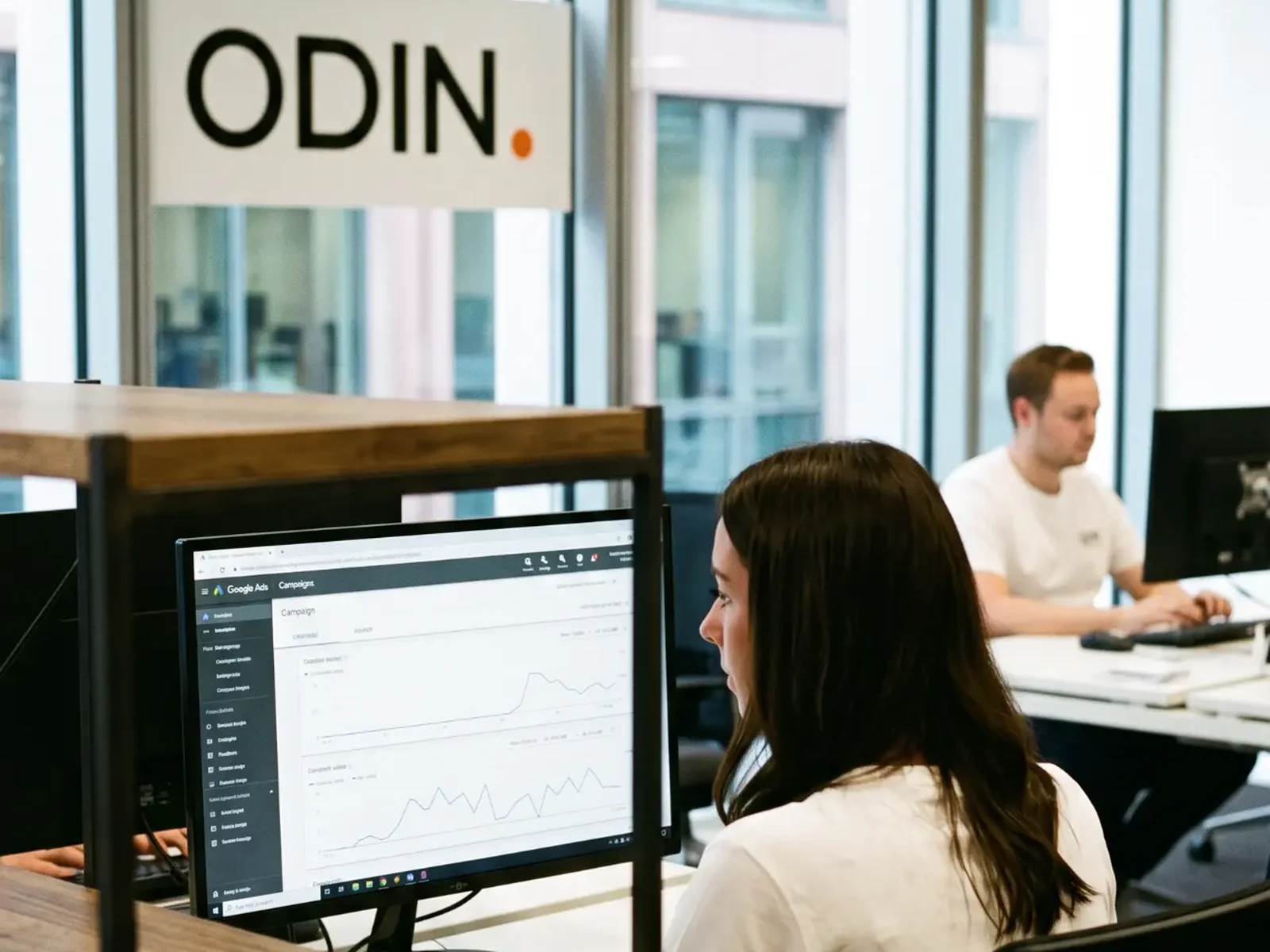
Executive Marketing Leadership On Demand.
Our Fractional CMO engagements embed senior leadership into your business — strategy, team, channels, reporting, hiring — without the salary, equity, or ramp-up risk of a permanent executive.
The Science
OKR setting, budget allocation, CAC/LTV modelling, board-grade reporting, and agency/vendor accountability frameworks built into every engagement.
The Art
Senior judgement on positioning, brand, hiring, and the unglamorous trade-offs that separate companies that compound from those that don't.
We don't run your campaigns. We make sure the right campaigns get run by the right people for the right reasons.
The 3-Pillar System.
Strategy & Planning Ownership
Annual marketing plans, quarterly OKRs, budget allocation, channel mix, GTM positioning, and the strategic trade-offs that determine whether the next 12 months compound or stall. Owned end-to-end.
Team & Agency Leadership
Direct management of in-house marketers and vendor relationships. Performance reviews, capability mapping, and the hiring sequence that moves your team from execution-by-default to execution-by-design.
Board-Grade Reporting
Pipeline, CAC, LTV, contribution margin, and channel ROI reporting that satisfies investors and gives the leadership team a single source of truth — not five conflicting dashboards.
How a Fractional CMO Engagement Actually Runs
The phrase "fractional CMO" gets used loosely enough that buyers often can't tell whether they're being offered strategic leadership or a glorified marketing manager on a retainer. A properly run engagement has a defined sequence, with decision points where scope and cadence are reset rather than left to drift.
Phase 1 — Diagnostic and audit
Two to four weeks. Before touching strategy, we audit what exists: channel performance, team capability, agency and vendor relationships, tech stack, reporting (or the absence of it), and the actual unit economics — CAC, LTV, payback period, contribution margin by channel. Most founder-led marketing functions have never had this pulled into one place. What you receive: a diagnostic report naming the real constraint, which is not always the one the business assumed. Decision point: whether the constraint is execution, leadership, or something upstream like positioning.
Phase 2 — Strategic plan and OKRs
The diagnostic becomes a plan: quarterly OKRs tied to revenue and pipeline, a budget allocation across channels, and a decision on what gets built in-house versus run through agencies. What you receive: a written plan the leadership team and board can hold you to. Decision point: sign-off on budget and team structure before execution begins.
Phase 3 — Team and agency integration
The Fractional CMO steps into direct leadership of in-house marketers and vendor relationships — running the meetings agencies used to run themselves, setting the brief, and holding everyone to the same OKRs. Where capability gaps exist, hiring begins here rather than being deferred. What you receive: a single leadership layer above every channel and every vendor.
Phase 4 — Weekly and monthly cadence
Weekly leadership 1:1s, twice-monthly all-marketing reviews, and monthly reporting prepared for the board or leadership team. This is where most in-house functions and agency relationships quietly fail — not from bad decisions but from no one making decisions on a schedule. What you receive: a rhythm the business can plan around.
Phase 5 — Quarterly reset
Every quarter, the plan is re-tested against results: what compounded, what stalled, where budget should move, and whether the current team and agency mix is still the right one. What you receive: a revised plan, not a repeated one — and, when the business has outgrown the fractional model, a hiring brief and handover plan for a full-time CMO.
What's Included in a Fractional CMO Engagement
Scope varies with company stage and team size, but a genuine Fractional CMO engagement is leadership and ownership, not a set of deliverables handed over on a schedule. The components below are what separates executive leadership from a part-time marketing manager wearing a bigger title.
Strategic ownership
- Annual marketing plan and quarterly OKRs tied to revenue and pipeline targets
- Budget allocation and re-allocation across channels as evidence comes in
- Positioning and go-to-market decisions, including when to call in brand strategy work rather than spend more on channels
- Build-versus-buy decisions on team, agencies and tooling
Team and vendor leadership
- Direct management of in-house marketers, including performance reviews and capability mapping
- Agency and freelancer management — briefing, holding to KPIs, and replacing underperformers
- Role design, interviewing and onboarding for every marketing hire
- Vendor-neutral orchestration across SEO, paid media, content and lifecycle, regardless of who executes the work
Reporting and accountability
- Board-grade dashboards on pipeline, CAC, LTV and contribution margin
- A single source of truth replacing the five conflicting spreadsheets most growth-stage companies accumulate
- Monthly reporting prepared for investors or the leadership team, not just for marketing's own record
Cadence
- Weekly leadership 1:1s with founders or the executive team
- Twice-monthly all-marketing reviews across every channel and vendor
- Monthly board or leadership prep
Two things sit outside default scope: hands-on channel execution — a Fractional CMO leads the people or agencies who build the campaign, rather than building it personally — and any engagement where the business isn't prepared to give the role real decision authority. Without authority over budget and team, it becomes advisory work, which is a different and less useful engagement.
Fractional CMO Engagement Models
"Fractional CMO" describes a role, not a single contract structure. The right model depends on how much marketing infrastructure already exists and how fast the business needs a leader in the seat.
Ongoing retainer
The most common structure: a fixed number of days per week, on a rolling monthly retainer, with a 90-day initial commitment to validate fit before either side extends. This suits businesses that need continuous leadership — team management, agency oversight, and a standing seat at the leadership table — rather than a project with an end date. Most engagements at the $2M-$25M stage sit here, because the leadership gap they're solving doesn't close after a single quarter.
Stabilise-and-transition
A defined 12-18 month engagement aimed explicitly at building the strategy, reporting and team structure a full-time CMO would eventually own, with a hiring brief and handover built into the final quarter. This suits businesses growing fast enough to expect they'll outgrow the fractional model within a known timeframe, and who want the function built properly before recruiting a permanent hire — rather than asking a new full-time CMO to build the plane while flying it.
Interim coverage
A shorter, bounded engagement covering a gap — a CMO departure, parental leave, or the period between deciding to hire a full-time CMO and actually finding the right person. The remit here is closer to "keep the function moving and reporting intact" than a ground-up strategic rebuild, though a genuine diagnostic still happens in week one.
Advisory-plus
A lighter-touch structure — typically half a day to one day a week — for businesses that already have a capable in-house marketing lead but need a more senior sounding board for strategy, budget trade-offs, and board reporting. This only works well when the in-house lead has real day-to-day authority already; if they don't, this model tends to under-deliver against the "leadership gap" problem a Fractional CMO is meant to solve.
Choosing between them
The deciding factors are usually: whether any senior marketing leadership exists in-house today, how fast the business is likely to outgrow a fractional arrangement, and whether the immediate need is building a function from scratch or keeping an existing one steady through a transition. We scope this on the discovery call rather than defaulting every client into the same structure.
Fractional CMO vs Full-Time CMO vs Agency-Only vs Consultant
Four models solve overlapping problems, and picking the wrong one is expensive in a different way each time — either you overpay for capacity you don't need, or you underpay for leadership you actually need.
Full-time CMO hire
Works when: the business is large enough — typically past $25M-$30M in revenue — to fully utilise a senior executive five days a week, and the marketing function is complex enough to need someone permanently embedded in leadership meetings, culture, and long-range planning. Breaks when: the company is between $2M and $25M. A loaded full-time CMO runs $280k-$420k a year including on-costs, carries a three-to-six-month ramp before they're productive, and if the hire is wrong, the cost is severance, a replacement search, and a year of lost momentum. Real cost: high fixed cost, high hire risk, full-time capacity that a growth-stage business often can't keep busy.
Agency-only
Works when: you already have someone internally who can set strategy, prioritise channels, and hold agencies accountable — the agency then needs only to execute against a clear brief. Breaks when: no one internally is doing that job, which is the most common state in founder-led businesses. Agencies report to whoever's in the room, optimise for their own channel or retainer, and have no mandate to tell you that the real problem is positioning rather than ad spend. Multiple agencies with no one orchestrating them commonly work against each other rather than toward one funnel. Real cost: lower headline fees, but strategy is either absent or quietly set by whichever vendor talks the loudest.
Marketing consultant
Works when: you have a specific, bounded problem — a positioning refresh, a channel-mix review, a go-to-market plan for a launch — and you need senior thinking delivered as a project with a start and an end. Breaks when: the need is ongoing. A consultant hands over a strategy document and leaves; nobody is left holding the team, agencies, and weekly decisions accountable to it. Strategy documents that no one owns tend to sit in a drive rather than change what happens on Monday. Real cost: good strategic input, no continuity of execution.
Fractional CMO
Works when: the business needs ongoing executive ownership — not a document, not a channel — at a cost and time commitment scaled to its stage. You get the strategic judgement of a full-time CMO, embedded weekly, with the authority to lead team and agencies, but without the fixed cost or hire risk. Breaks when: the business isn't willing to give the role real decision authority over budget and people — at that point it degrades into advisory work, which is closer to consulting than leadership. It also isn't the right model once a company is large enough to fully occupy a full-time executive; at that point, a Fractional CMO engagement is often the bridge that helps recruit and hand over to one.
The honest test
If no one in the business can currently answer "what's our CAC by channel and why did it move last quarter" without pulling three spreadsheets together, that's a leadership gap, not an execution gap — and it's the gap a Fractional CMO closes. If the answer is readily available and the problem is that campaigns simply aren't performing, the fix is more likely a consulting engagement or better execution from your existing agencies, not a new layer of leadership.
Fractional CMO Leadership by Sector
The leadership discipline is the same across industries — strategy, team, channels, reporting. What changes is which channels dominate the plan, what the sales cycle looks like, and where the constraint usually sits.
Professional services
Growth is usually constrained by pipeline visibility and referral dependency rather than by any single channel underperforming. A Fractional CMO here typically builds out organic search and content as a compounding asset alongside structured lead generation, while installing the reporting that finally separates "busy" from "profitable" client acquisition. The common failure mode is a partner-led firm where marketing has never been asked to justify its spend against a CAC number, because growth historically came from relationships.
Healthcare and clinics
Multi-location clinic groups often have marketing spread across each site with no central strategy, duplicated tooling, and wildly inconsistent lead quality between locations. A Fractional CMO consolidates reporting across sites, standardises what "good" looks like for enquiry volume and conversion, and coordinates local paid and search investment against a single group-level budget rather than site-by-site guesswork. Advertising rules specific to health services also need to sit inside the strategy from day one, not be checked after the fact.
Trades and home services
Growth here is usually gated by lead volume, lead quality, and how fast the business can respond — marketing and sales operations are more tightly coupled than in most sectors. A Fractional CMO typically tightens the handoff between paid and organic lead generation and the sales team's follow-up speed, since a well-performing campaign feeding a slow follow-up process is a wasted budget rather than a marketing problem. Seasonal demand planning and local market coverage also need a central owner once a trades business operates across more than one region.
Ecommerce and DTC
The constraint is frequently unit economics discipline — CAC, LTV, and contribution margin by channel — rather than any individual campaign's creative. A Fractional CMO installs the reporting that makes channel-level profitability visible, then reallocates budget away from channels that look good on last-click attribution but don't hold up on contribution margin. Coordinating paid acquisition, retention, and content into one calendar, rather than three teams running their own, is a recurring early win.
B2B and manufacturing
Long sales cycles and multiple stakeholders mean marketing's contribution is easy to under-credit and easy to under-fund as a result. A Fractional CMO typically builds the pipeline reporting that connects marketing activity to sales-qualified opportunities months later, so budget decisions stop being made on gut feel. Aligning marketing and sales on lead definitions and handoff — a persistent friction point in B2B — is usually one of the first structural fixes.
Common Fractional CMO Mistakes and What Good Looks Like
Fractional CMO engagements fail in predictable, avoidable ways, almost always because scope or authority was never properly defined at the start.
Hiring for a title, not for authority
Bringing in a Fractional CMO but leaving budget and hiring decisions with the founder defeats the purpose — the engagement becomes advisory rather than leadership, and nothing actually moves. Good looks like: budget authority and team leadership genuinely transferred, with the founder freed to focus on the business rather than campaign approvals.
No diagnostic before the plan
Jumping straight to a strategic plan without first auditing what exists means the plan solves problems that may not be the real constraint. Good looks like: a diagnostic phase that names the actual bottleneck — which is sometimes leadership, sometimes positioning, sometimes simply that no one has ever measured CAC by channel.
Treating it as a part-time employee rather than an executive
Expecting a Fractional CMO to personally execute campaigns rather than lead the people and agencies who do misuses the role and the day rate. Good looks like: the Fractional CMO's time spent on strategy, team leadership and accountability, with execution sitting with in-house marketers or agencies.
No reporting cadence installed
Without weekly and monthly rhythms, decisions drift back to whoever is available that day, and the business loses the accountability it was paying for. Good looks like: a fixed cadence — weekly leadership check-ins, twice-monthly all-marketing reviews, monthly board-grade reporting — that survives even a busy quarter.
No exit plan
Engagements that run indefinitely without ever reassessing whether the business has outgrown the fractional model waste money on one side or leave a capability gap on the other. Good looks like: an honest quarterly conversation about whether the company still fits the fractional model, or whether it's time to recruit and hand over to a full-time hire.
Confusing this with agency management alone
Some engagements sold as "Fractional CMO" are really just a senior account manager coordinating agencies, with no strategic ownership of budget, hiring or positioning. Good looks like: a role with genuine authority over the plan, the team, and the numbers reported to the board — not just a calendar of agency check-ins.

Fractional CMO vs Alternatives.
Loaded Annual Cost
$280k-$420k (FT CMO + on-costs)
$96k-$216k Fractional CMO retainer
Time to Productivity
3-6 month ramp
Productive from week one
Hire Risk
Severance, equity, reputational risk
30-day notice, no lock-in
Agency Neutrality
In-house bias, internal politics
Vendor-agnostic — optimise your business, not our retainer
Strategic Depth
Often a senior generalist
Specialised in growth-stage Australian companies
Channel Knowledge
Strong in 1-2 channels
Cross-channel: SEO, paid, content, lifecycle, brand
Reporting
Inherits whatever exists
Board-grade framework installed in first 60 days
Exit
Severance, replacement search
We help recruit your full-time CMO when you outgrow us
Inside the Fractional CMO Engagement.
Ongoing executive marketing leadership embedded into your business — calibrated to your stage, scope, and growth goals.
Quarterly Strategic Plan
Marketing plan, OKRs, budget allocation, and channel mix reviewed and re-set every quarter against revenue and pipeline goals.
Team & Agency Leadership
Direct management of in-house marketers, agencies, and freelancers. Performance reviews, hiring, and capability mapping.
Channel Orchestration
Alignment across SEO, paid, content, lifecycle, and brand so every channel pulls toward the same pipeline goal.
Board-Grade Reporting
Pipeline, CAC, LTV, contribution margin, and channel ROI reporting that survives investor scrutiny.
Weekly Cadence
Weekly leadership 1:1s, twice-monthly all-marketing reviews, and monthly board prep. Real ownership, not advisory.
Hiring & Onboarding
Role design, interviewing, and onboarding for every marketing hire — including the full-time CMO when you outgrow the fractional model.
This Service Works Best For…
Australian companies between $2M and $25M in annual revenue
Founder-led businesses where the founder is still running marketing by default
Companies with 1-10 in-house marketers and no senior leader above them
Series A/B startups needing CMO-grade strategy before they can justify a full-time hire
Mid-market businesses with multiple agencies and no one orchestrating them
This probably isn't the right fit if…
Companies under $1M revenue (founder-led marketing is still the right answer at this stage)
Companies over $30M revenue (you need a full-time CMO — we can help recruit one)
Businesses looking for tactical channel execution only (see our <a href='/marketing-consulting' class='text-accent underline'>Marketing Consulting</a> or specific channel services)
Organisations unwilling to give a Fractional CMO real decision authority
Pre-revenue startups still finding product-market fit
Our Unprecedented Guarantee.
The 90-Day Momentum Guarantee
If we don't hit the agreed-upon KPIs within 90 days, we work for free until we do. No caveats. No fine print.
Your success is our success. We only win when you win.
No Lock-In Contracts
Stay because we deliver, not because you're trapped.
Full Transparency
Every action we take, every result we achieve - visible in real time.
Dedicated Team
A senior strategist and specialist team assigned to your account.
Common Questions
Frequently Asked Questions
A Fractional CMO is a senior marketing leader who takes ownership of your marketing function on a part-time, ongoing basis — typically 1-3 days per week — without the cost or commitment of a full-time executive hire. Engagements run on monthly retainers, with clear deliverables: strategy, team leadership, channel orchestration, vendor management, board reporting, and quarterly OKR setting. You get executive marketing leadership at roughly 30-50% of the loaded cost of a full-time CMO.
Most companies between $2M and $25M in revenue are too small for a $300k+ full-time CMO but too large for the founder to keep running marketing themselves. A Fractional CMO bridges that gap. You get executive-level strategy, hiring, and channel oversight without the salary, equity, severance, and ramp-up risk of a permanent senior hire — and if you outgrow the model, we help you recruit and onboard a full-time replacement.
Fractional CMO engagements are scoped to time commitment, remit and team size — we quote after a scoping call rather than publishing a price sheet. Every engagement runs at roughly half the loaded cost of an equivalent full-time CMO. We offer 90-day trial structures so you can validate fit before committing long-term.
Strategy: build and own the marketing plan, OKRs, and budget. Leadership: manage in-house marketers, agencies (including ours when relevant), and vendors. Channel orchestration: align SEO, paid, content, and lifecycle into one funnel. Reporting: board-level dashboards on pipeline, CAC, LTV, and contribution. Hiring: define roles, run interviews, and recruit the team your business needs next.
Alongside. A Fractional CMO orchestrates agencies, freelancers, and in-house teams so they actually pull in the same direction. We frequently run Fractional CMO engagements for clients where Odin Digital is not the agency of record — agency neutrality is part of the value.
Marketing Consulting is project-based: a strategic engagement to solve a specific problem (positioning, channel mix, GTM launch). Fractional CMO is ongoing executive leadership embedded into your business — same senior thinking, but with continuous ownership of execution, hiring, and reporting.
Most of our Fractional CMO clients are between $2M and $25M in annual revenue with 1-10 marketers (or none) and a founder or CEO who's been running marketing by default. Companies under $2M usually benefit more from project-based consulting; companies over $25M typically need a full-time CMO.
Most Fractional CMO engagements run 12-24 months, with a 90-day initial commitment to validate fit. Some clients use us as a permanent fractional resource; others use 12-18 months to stabilise the function before recruiting a full-time CMO — at which point we help with the hire and handover.
A marketing manager executes and coordinates; a CMO — fractional or otherwise — owns strategy, budget allocation, hiring, and accountability to the board. If the person in the role can't reallocate budget between channels or make a hiring call without founder sign-off on every decision, it's not functioning as a CMO engagement regardless of the title.
Yes — this is a common starting point. The Fractional CMO builds the initial strategy and reporting, decides what should run through agencies versus be hired in-house, and leads the first hires as the team is built out, rather than inheriting an existing structure.
They stay in place if they're performing. The Fractional CMO becomes the single point of accountability above them — briefing, reviewing, and holding each agency to the same OKRs — rather than replacing them by default. Underperforming vendors get addressed directly rather than quietly tolerated.
Against the OKRs and budget plan set in the first 60-90 days: pipeline growth, CAC and LTV trends by channel, contribution margin, and whether reporting has actually replaced guesswork at the leadership table. A working engagement produces a plan the board can hold the business to, not just activity.
Yes — most engagements start with a 90-day initial commitment specifically so both sides can validate fit before extending into a longer-term retainer.
Trusted by Leaders
Across Australia.
Don't take our word for it. Here's what business owners and marketing directors say about working with Odin Digital.
“Can't recommend enough”
Lucas & the agency is honestly one of the best things that ever happened to my business. When I first started working with him for SEO and ads, he went way beyond that - dropping knowledge on pricing, funnels, and how to actually structure things to scale. I was doing $20k months on my own, then after working with Lucas on a new product launch, I was averaging over $100k a month. Mostly thanks to advice I never even paid for. Five years later, he still runs my ads and I still call him for guidance. If you're serious about your business, working with Lucas & Odin Digital is a high leverage move.

“Finally found the perfect growth program”
Their data-driven approach to SEO put us on the first page of Google for our most competitive keywords. Revenue is up 180%. Working with the Odin team feels incredibly personalised.

“This is the way marketing should be done”
The team at Odin doesn't just run ads - they re-engineered our growth systems. Our ROAS improved from 2x to 6x in just 90 days. It's clear they care about giving customers a proactive, user-friendly experience.

“A true extension of our team”
From day one, Odin felt like an in-house team. They took the time to understand our industry, built a strategy around our goals, and delivered results that exceeded every benchmark we set. Our cost per acquisition dropped by 62%.
“Results that speak for themselves”
We'd been burned by agencies before, so we were skeptical. Odin proved us wrong within the first quarter - organic traffic up 210%, and our pipeline has never been healthier. They actually do what they say they'll do.

“Extremely Happy With The Results”
Bulk Buys has been working with the team for the last couple of months and we have been extremely happy with the results the team has achieved in such a short time. Communication and service provided by the team has been excellent. Thank you Alf & Calum!
What a fractional CMO actually directs
A fractional CMO is a decision-making role, not a delivery one. The job is choosing which channels get funded and holding them to commercial targets, using the same four-phase framework set out on the Odin Method page. Where you want strategy without the ongoing seat, marketing consulting is the lighter option.
In practice the decisions usually span demand capture through SEO and Google Ads, demand creation through paid social and content, and conversion through CRO, funnel design and lifecycle email. Brand positioning questions route to branding or rebranding, and pipeline questions to lead generation.
For B2B and software organisations the roadmap leans on B2B SEO and SaaS SEO; for large estates, enterprise SEO. Sector context sits on the industries hub and market context on the locations hub. The team you would be working with is listed on the about page. Book an introductory call.
Ready for a Marketing Leader
Who Owns the Outcome?
Book a 90-minute discovery session and we'll scope what a Fractional CMO engagement would look like for your business — no obligation.
Diagnostic on current marketing function, team, and agency stack
Proposed scope, cadence, and pricing tailored to your stage
Initial 90-day plan if you decide to proceed